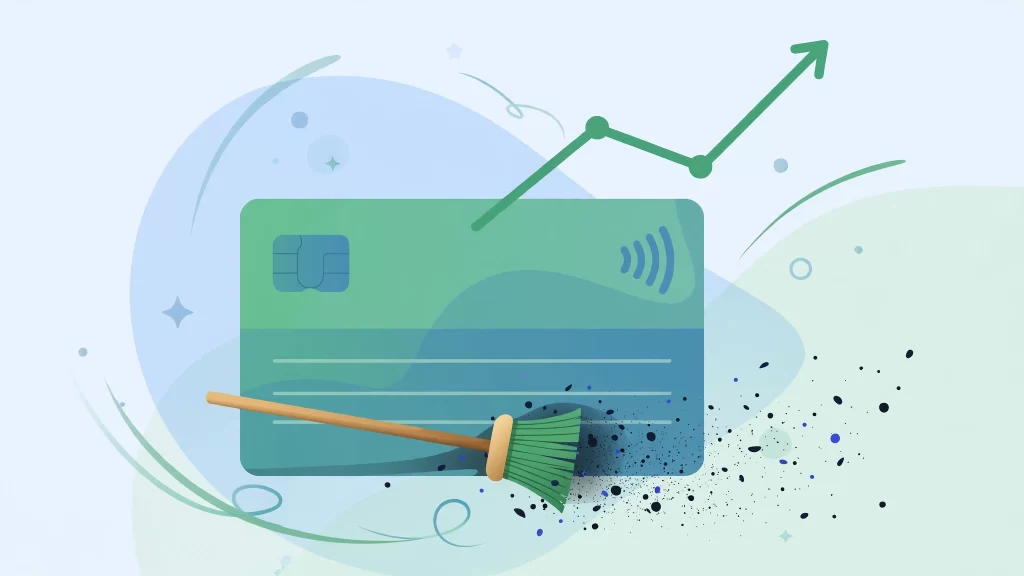
A bad credit score feels like a closed door: higher interest rates, rejected applications, bigger deposits. The good news is that credit is not permanent. With a clear plan and a few months of steady habits, most people can raise their score a lot. Here is how to clean up your credit, step by step.
- Get your credit reports and read them. You cannot fix what you cannot see. In the United States, you can get a free copy of your credit report from each of the three main bureaus — Equifax, Experian and TransUnion — at AnnualCreditReport.com. Get all three and read them line by line. Look for accounts you do not recognize, balances that look wrong, late payments you know you made on time, and old debts that should have fallen off. Write down every error you find, because the next step is disputing them.
- Dispute every error. If a report shows something wrong, dispute it with the bureau that published it, online or by mail. Explain what is wrong and include any proof you have, like a payment receipt or a statement. The bureau generally has about 30 days to investigate. Removing even one wrong late payment or one account that is not yours can lift your score. And do not pay a company hundreds of dollars to do this for you — you can dispute errors yourself for free.
- Pay everything on time from now on. Payment history is the biggest factor in your credit score. One new late payment can undo months of progress, so make on-time payments your first priority. Set up automatic payments for at least the minimum amount on every card and loan. If money is tight, call the lender before the due date — many will work with you on a payment plan, and that is always better than a missed payment on your report.
- Lower your credit card balances. The second biggest factor is how much of your available credit you are using, called credit utilization. If your cards are close to maxed out, your score suffers even if you pay on time. Try to bring every card below 30% of its limit, and below 10% if you can. Pay down the smallest balance first for a quick win, or the highest-interest card first to save money — either approach works if you stick with it. And avoid closing old cards: closing one lowers your total available credit and can shorten your credit history, both of which can hurt your score.
- Do not apply for new credit while you rebuild. Every application for a new card or loan can cause a small, temporary drop in your score. While you are cleaning up your credit, stop applying. Focus on the cards you already have, keep them open, keep them paid, and let time work for you.
- Build positive history every month. Credit scores reward steady, boring behavior. A small recurring charge on a card, paid in full every month, builds a clean payment record. If you cannot get a regular card yet, a secured credit card — where you put down a deposit that becomes your limit — is one of the safest ways to rebuild. Use it for one small purchase a month and pay it off in full. Negative items do not last forever. Most late payments and collections fall off your report after about seven years, and their damage fades with time, especially once newer positive history piles up.
How long does it take? Fixing errors can raise your score in a month or two. Paying down balances usually shows results within one or two billing cycles. Rebuilding after serious damage takes longer — often 6 to 12 months of on-time payments before you see a big change. There is no overnight fix, and anyone who promises one is selling you something. Start today: pull your reports, dispute what is wrong, automate your payments, and pay your balances down. Your future self — the one getting approved at a good rate — will thank you.
This article is for general education only and is not financial advice. For help with your specific situation, consider talking to a nonprofit credit counselor.


Leave a Reply